Replacing Older Roofing Materials: What Do the Rules and Regulations Say?

Replacing Older Roofing Materials: What Do the Rules and Regulations Say?
When your roof starts showing its age and you’re considering a replacement, there’s more to think about than just choosing new shingles or hiring a contractor. Building codes, environmental regulations, and safety standards all play a role in how the work should be done. Here’s an overview of what U.S. homeowners should know before replacing an older roof.
When Does Roof Replacement Require a Permit?
In many areas, you can replace your roof without a full building permit, but there are exceptions. Local building departments often require a permit if you’re changing the roof’s structure, slope, or materials. Historic districts and homeowners’ associations (HOAs) may also have specific rules about appearance and materials.
As a general guideline:
- Same material replacement (for example, asphalt shingles for asphalt shingles) often does not require a permit.
- Changing materials (for example, from wood shake to metal or tile) may require approval.
- Structural changes (altering the pitch, adding dormers, or replacing decking) almost always require a permit.
Before starting, contact your local building department. They can confirm whether your project needs a permit and what documentation is required.
Environmental and Safety Considerations: Handling Asbestos and Other Hazards
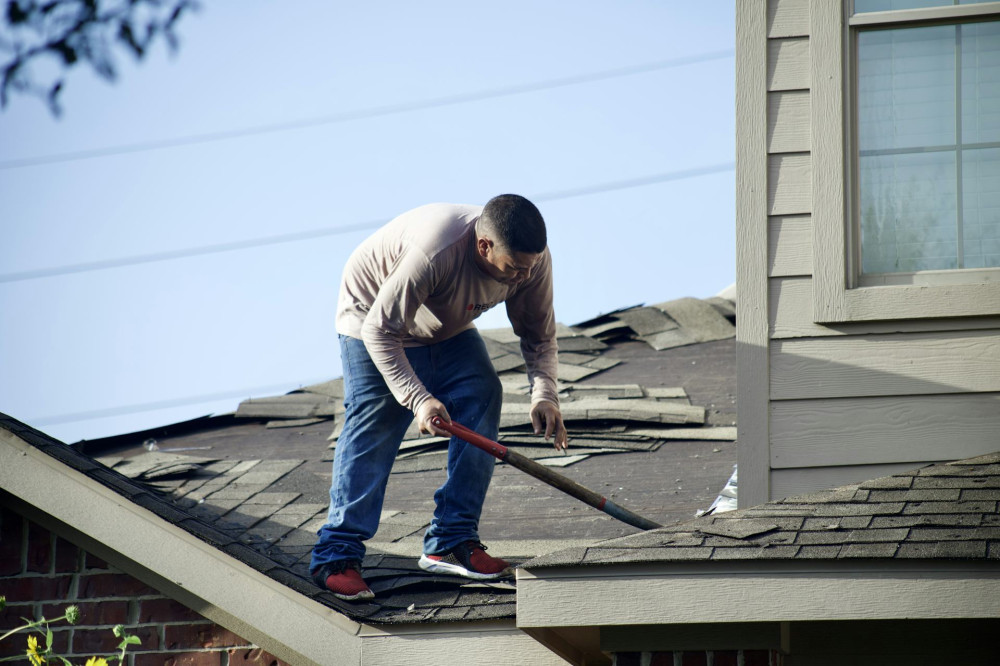
Many older roofs—especially those installed before the 1980s—may contain asbestos in shingles, underlayment, or flashing materials. If your roof might contain asbestos, you should not attempt to remove it yourself. Federal law, enforced by the Environmental Protection Agency (EPA) and the Occupational Safety and Health Administration (OSHA), requires that asbestos removal be performed by licensed abatement professionals.
Asbestos-containing materials must be disposed of at approved facilities that handle hazardous waste. This protects both the environment and your health, as asbestos fibers can cause serious respiratory diseases if inhaled.
If you’re unsure whether your roof contains asbestos, have a sample tested by a certified laboratory. It’s a small step that can prevent major health and legal issues later.
Energy Efficiency and Insulation Requirements
Roof replacement is also an opportunity to improve your home’s energy performance. The U.S. Department of Energy (DOE) and local building codes often require that when a roof is replaced, the insulation beneath it meets current energy-efficiency standards.
This might mean adding insulation to the attic or roof deck to meet the minimum R-value for your climate zone. Some states and municipalities have adopted versions of the International Energy Conservation Code (IECC), which sets these standards. An energy auditor or roofing contractor familiar with local codes can help ensure compliance.
Aesthetic and Neighborhood Restrictions
If you live in a neighborhood governed by an HOA or in a historic district, there may be restrictions on roofing materials, colors, or styles. These rules are designed to maintain a consistent appearance or preserve the character of older buildings.
Before signing a contract, review your HOA’s covenants or contact your local historic preservation office. Violating these rules can result in fines or being required to redo the work.
Læs også:
Choosing a Contractor and Understanding Responsibility
When hiring a roofing contractor, make sure they are licensed, insured, and experienced with the type of roof you’re installing. Always get a written contract that outlines the scope of work, materials, timeline, and total cost.
Even if you hire a professional, you as the homeowner are ultimately responsible for ensuring the work complies with local codes and regulations. Consider having a building inspector or independent consultant review the work during and after installation.
Insurance and Warranties
Before the project begins, contact your homeowner’s insurance company. Some policies require notification before major renovations, and coverage for damage during construction may vary. After the roof is replaced, keep documentation of the materials used and any warranties provided by the manufacturer or contractor.
Many reputable contractors offer workmanship warranties, and some roofing materials come with long-term manufacturer warranties. These can be valuable if issues arise later.
A New Roof—And a New Responsibility
Replacing an old roof is a major investment that can improve your home’s value, comfort, and energy efficiency. But it’s also a project governed by a web of local, state, and federal regulations. By understanding the rules, obtaining the right permits, and working with qualified professionals, you can ensure your new roof is safe, compliant, and built to last.
Læs også: